Category: Uncategorized

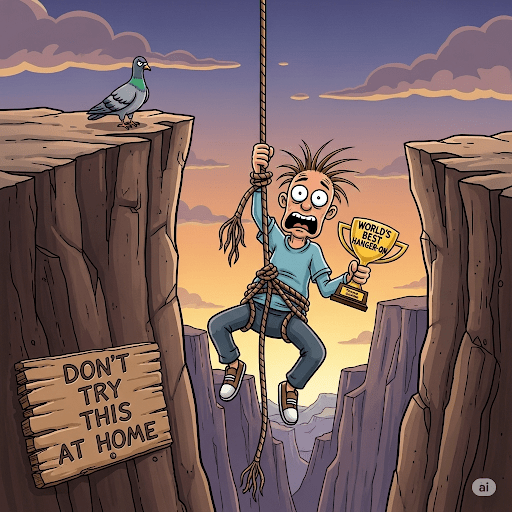
  • When Hanging In There is Not Cutting It

    May 27, 2025

    By: Liz Cabrera

    Hi everyone,

    I’ve been reflecting a lot recently on the challenges of being a working parent in the United States and how systemic barriers, rather than support, often exacerbate the stress faced by parents who simply want to build fulfilling lives and raise their children in peace.

    It makes me wonder why achieving this feels so difficult and what exactly those underlying barriers are.

    As a relatively successful, educated professional in her 40s, married to a spouse who holds similar values, I often find myself overwhelmed. My husband also carries the significant responsibility of caring for his first-generation Iranian parents who have limited English proficiency and rely heavily on him.

    I, too, am the only child of an aging mother, and I constantly feel guilty about not having enough time for her. I worry about how I will manage her care while already feeling drained by my current responsibilities across various roles.

    Being a good role model for my wonderful six-year-old neurotypical daughter and my three-year-old nonverbal neurodivergent son with Autism is incredibly important to me. I strive to be fully present for them while also being a committed and devoted employee in my human services career. There are also societal expectations about maintaining a certain appearance.

    On top of this, I am responsible for providing healthy, home-cooked meals for my children, exercising sound clinical judgment in my professional decisions, and also prioritizing my own health and well-being.

    And let’s not forget the crucial aspect of nurturing our important relationships. It often feels like there’s just enough time in the day for everything *except* what truly matters.

    Metaphorically, and sometimes physically, I feel completely worn down. My body aches, and yet, it feels unacceptable to express this exhaustion or the anxiety that comes with trying to manage so many responsibilities perfectly. Complaining feels selfish and shameful, especially when others seem to be in similar or even more challenging situations. The narrative often suggests that those with a seemingly “ideal life” should not feel this way.

    It’s as if there’s an unspoken rule: don’t reveal these struggles. People might think you’re overwhelmed or unable to cope. Instead, the pressure is to “fake it till you make it,” perhaps finding unhealthy escapes rather than seeking genuine solutions or support.

    So, what can be done? How can we address these systemic challenges? Is anyone else feeling this way?

    The common refrain of “hang in there” often doesn’t feel like enough.

    With love, gratitude, and hope.

    Liz C. 
  • The Importance of Awareness and Adjustments

    May 19, 2025

    By: Liz Cabrera

    Nostalgia for slower times

    This morning, I was reminded of how easily our work routines can clash with our natural human rhythms, potentially leading to increased stress and decreased well-being.

    My attempt to follow a typical weekday morning schedule, balancing family, household chores, and the pressure of arriving at the office on time, left me feeling hurried and unprepared even before my workday began. This experience prompted me to consider the wider implications of such demanding structures.

    Later, during a quiet moment, I noticed my natural inclination for a mid-morning snack, a pattern that brought back positive memories from previous roles. In my early career at an international call center and later as a Visual Merchandiser, a mid-morning break was a normal and even encouraged part of the day. These breaks offered not only physical nourishment but also opportunities for connection and a welcome pause from focused work.

    These reflections highlight a key point: our current professional systems might unintentionally create tension by overlooking the importance of aligning with our inherent biological and social needs. When we are constantly trying to fit into rigid schedules that don’t accommodate natural energy fluctuations and the need for regular breaks, it can lead to lower productivity, higher stress levels, and a diminished sense of personal well-being.

    My experience reflects a broader need for professionals in all fields to think about:

    *   **The impact of demanding schedules:** Are our current work structures truly maximizing productivity, or are they contributing to burnout and a feeling of constantly being behind?

    *   **The value of natural breaks:** Could incorporating more flexible or standardized break times throughout the day lead to improved focus and overall well-being?

    *   **The importance of self-awareness:** Are we in tune with our own natural rhythms and advocating for systems that better support these needs?

    Ultimately, recognizing when our systems feel “out of sync” and actively seeking adjustments is essential. This requires both individual awareness and a willingness within professional environments to explore more human-centered approaches to work. By developing a greater understanding of our natural rhythms and their impact on our professional lives, we can collectively strive to create systems that improve both well-being and productivity.

    I would appreciate hearing your thoughts and experiences on this important matter.

    Sincerely,
    Elizabeth Cabrera

  • The Pathologizing of Sanity: When a Parent’s Exhaustion is Labeled as “Ideal”

    August 4, 2025

    By Liz Cabrera

    “In today’s world, we’re quick to label distress as a mental illness. As a contributor to Mad in America wrote, “Sadness becomes depression, anxiety becomes an anxiety disorder, and an inability to focus is called ADHD. This framework, while sometimes useful, often ignores a crucial truth: what we call “psychopathology” may simply be a sane and normal response to an insane system.” – Mad in America

    I’ve learned this firsthand, as a professional, a mother, and an immigrant navigating the relentless demands of modern life.

    Our society has been conditioned to believe that an “ideal” life means a loving spouse, a nice home, a good job, and two beautiful children. By those standards, I should be hitting myself on the chest with stones for being ungrateful. I am a 45-year-old educated professional, a wife to a successful husband, a mother to both a neurotypical daughter and a nonverbal neurodivergent son. I am also the only child of my aging mother, while my husband does the same for his parents. By all accounts, I have the ideal life. And yet, I am exhausted, anxious, and feel as if my body is breaking under the weight of it all.

    This exhaustion is not an individual failing; it is a predictable and rational response to an unsustainable system.

    A Mother’s Paradox: The Unattainable Standard

    To be a “fit parent” today is to be a modern-day superhero. We are expected to be a leader, teacher, cook, doctor, chauffeur, personal assistant, and punching bag all at once. At work, we’re expected to perform with the same capacity as colleagues who may not have similar responsibilities at home. At the same time, society punishes parents for “neglect” if we leave our children unattended, yet pushes back when we ask for the help we need to stay in the workforce and provide for our families.

    This is the paradox: we’re told to be everything to everyone, but we’re given no real support to do so. We’re left to “fake it till we make it,” escaping our feelings through work, endless scrolling, or other distractions. We are expected to shoulder the immense emotional and physical load of parenting, caregiving, and professional life, all while pretending it’s easy. We are told to be silent about our struggle because everyone else is in a similar, or worse, situation. The shame is real.

    My personal story is a testament to this struggle. A simple afternoon with my children illustrates the invisible labor required to raise them. Washing hands, warming up food, cleaning up messes, and helping with bowel movements—these are not just tasks; they are a constant, unending series of small actions that take up my time, energy, and mental space. My daughter looks at me and says, “Mommy, I want to be with you,” and in that moment, I know that being present for my kids and my aging mother is my priority. This is the reality for countless professional parents, especially mothers.

    The Community We’ve Lost

    My own childhood in Santo Domingo, Dominican Republic, was rich with community. I grew up surrounded by a vibrant web of caring adults, a large extended family, and peers who provided a constant sense of belonging and collective responsibility. Life was not as isolated; we lived in a society that, by its nature, fostered strong social bonds.

    Today, my children’s experience in the United States is vastly different. Despite my best efforts, their relationships are often scheduled, fragmented, and confined to the hours of organized activities. This is not a failure of love or effort on my part; it is a symptom of a system that makes community building a monumental challenge. The psychological burden of this isolation is immense.

    This isolation is a key factor in the rising rates of what we call mental illness. When we lose our communal support systems, we are left to face the stressors of a fast-paced, hyper-individualistic society alone. Our society has become an over-stimulating environment that creates a perfect storm of stress. For a parent, this constant pressure and lack of a village can lead to burnout, which is then often pathologized as a disorder rather than a normal response to an unsustainable lifestyle.


    Reclaiming Sanity

    This is not to say that all mental health conditions are purely systemic, but we must reframe the conversation. We have to stop blaming individuals for struggling and start looking at the systems that are failing them.

    My journey has led me to a simple, yet profoundly difficult, conclusion: I must become ruthless with my time and energy. It is my responsibility to prioritize what is best for me and my children, which means cutting away the excess that drains my energy. It means challenging the cultural and societal expectations that demand a constant state of busyness and sacrifice.

    I know I don’t stand alone. There are countless others out there suffering in silence, feeling overwhelmed and guilty for not being able to “do it all.” My hope is that by sharing my story, I can inspire, inform, and create a sense of community with others who see themselves reflected in these struggles. We must advocate for systemic changes that better support working parents and, in doing so, begin to build a more compassionate and understanding society.