Tag: mental-health

  • Want Strategic Clarity? You Must Close the Door and Listen to the “Awakening” Parts of You

    Recently, I experienced a sensation that was both exciting and confusing: I felt as though old parts of me were slowly awakening and coming back to life. It’s the thrill of recognizing forgotten skills, buried passions, or essential values that want to be integrated into my daily work.

    Yet, this internal awakening creates a strange tension. Why is it that sometimes I can write a line or two lines, and then I hit a complete standstill? I know I have more to say, more strategy to articulate, but I am forced to wait for the nudge, waiting for the information to come to my consciousness in a coherent manner.

    The struggle for professional flow isn’t a problem of talent; it’s often a problem of internal bandwidth and external noise.

    The Energetic Block of the Divided Self

    Many of us go to work bringing only 60% of ourselves—the parts we deem “professional” or “acceptable.” We leave the passionate, curious, and sensitive parts locked away.

    However, true, high-impact work—the kind that feels “almost like magic”—requires the whole self. That standstill is often the internal system refusing to move forward until all your parts—the logical mind, the creative spirit, and the essential values—are aligned and ready to contribute.

    The confusion arises because we are simultaneously greeting our most authentic self and bumping up against years of noise that prevents us from truly listening to it.

    Cultivating Coherence: Solitude is the Conduit

    The key, I realized, is not to force the flow, but to create the conditions for coherence. The internal information we need to move past a block is always available, but it can easily become “awash by all the noise and distractions” if we don’t protect it.

    To stay connected to that source of deep, guiding information, we must consciously cultivate:

    1. Silence and Stillness: This is the intentional boundary we set to amplify our internal signal. Just as a radio needs quiet to tune a faint frequency, our minds need quiet to receive original insights.
    2. A State of Relaxation: Creative and strategic breakthroughs rarely happen under duress. They flow when we loosen our grip (embracing that concept of “gentle pressure”) and allow the real self to flow.

    The Professional Payoff

    This isn’t just self-care; it’s a competitive advantage. When you achieve internal integration, you move faster because you are no longer hitting those exhausting standstills. Your output becomes instantly more coherent, valuable, and authentic.

    Ask yourself: Am I waiting for the information to come to me, or am I creating the silence and stillness required for my integrated self to speak?
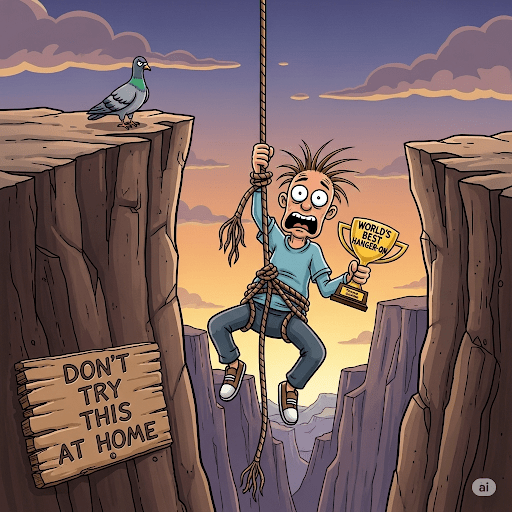

  • When Hanging In There is Not Cutting It

    May 27, 2025

    By: Liz Cabrera

    Hi everyone,

    I’ve been reflecting a lot recently on the challenges of being a working parent in the United States and how systemic barriers, rather than support, often exacerbate the stress faced by parents who simply want to build fulfilling lives and raise their children in peace.

    It makes me wonder why achieving this feels so difficult and what exactly those underlying barriers are.

    As a relatively successful, educated professional in her 40s, married to a spouse who holds similar values, I often find myself overwhelmed. My husband also carries the significant responsibility of caring for his first-generation Iranian parents who have limited English proficiency and rely heavily on him.

    I, too, am the only child of an aging mother, and I constantly feel guilty about not having enough time for her. I worry about how I will manage her care while already feeling drained by my current responsibilities across various roles.

    Being a good role model for my wonderful six-year-old neurotypical daughter and my three-year-old nonverbal neurodivergent son with Autism is incredibly important to me. I strive to be fully present for them while also being a committed and devoted employee in my human services career. There are also societal expectations about maintaining a certain appearance.

    On top of this, I am responsible for providing healthy, home-cooked meals for my children, exercising sound clinical judgment in my professional decisions, and also prioritizing my own health and well-being.

    And let’s not forget the crucial aspect of nurturing our important relationships. It often feels like there’s just enough time in the day for everything *except* what truly matters.

    Metaphorically, and sometimes physically, I feel completely worn down. My body aches, and yet, it feels unacceptable to express this exhaustion or the anxiety that comes with trying to manage so many responsibilities perfectly. Complaining feels selfish and shameful, especially when others seem to be in similar or even more challenging situations. The narrative often suggests that those with a seemingly “ideal life” should not feel this way.

    It’s as if there’s an unspoken rule: don’t reveal these struggles. People might think you’re overwhelmed or unable to cope. Instead, the pressure is to “fake it till you make it,” perhaps finding unhealthy escapes rather than seeking genuine solutions or support.

    So, what can be done? How can we address these systemic challenges? Is anyone else feeling this way?

    The common refrain of “hang in there” often doesn’t feel like enough.

    With love, gratitude, and hope.

    Liz C. 

  • The Importance of Awareness and Adjustments

    May 19, 2025

    By: Liz Cabrera

    Nostalgia for slower times

    This morning, I was reminded of how easily our work routines can clash with our natural human rhythms, potentially leading to increased stress and decreased well-being.

    My attempt to follow a typical weekday morning schedule, balancing family, household chores, and the pressure of arriving at the office on time, left me feeling hurried and unprepared even before my workday began. This experience prompted me to consider the wider implications of such demanding structures.

    Later, during a quiet moment, I noticed my natural inclination for a mid-morning snack, a pattern that brought back positive memories from previous roles. In my early career at an international call center and later as a Visual Merchandiser, a mid-morning break was a normal and even encouraged part of the day. These breaks offered not only physical nourishment but also opportunities for connection and a welcome pause from focused work.

    These reflections highlight a key point: our current professional systems might unintentionally create tension by overlooking the importance of aligning with our inherent biological and social needs. When we are constantly trying to fit into rigid schedules that don’t accommodate natural energy fluctuations and the need for regular breaks, it can lead to lower productivity, higher stress levels, and a diminished sense of personal well-being.

    My experience reflects a broader need for professionals in all fields to think about:

    *   **The impact of demanding schedules:** Are our current work structures truly maximizing productivity, or are they contributing to burnout and a feeling of constantly being behind?

    *   **The value of natural breaks:** Could incorporating more flexible or standardized break times throughout the day lead to improved focus and overall well-being?

    *   **The importance of self-awareness:** Are we in tune with our own natural rhythms and advocating for systems that better support these needs?

    Ultimately, recognizing when our systems feel “out of sync” and actively seeking adjustments is essential. This requires both individual awareness and a willingness within professional environments to explore more human-centered approaches to work. By developing a greater understanding of our natural rhythms and their impact on our professional lives, we can collectively strive to create systems that improve both well-being and productivity.

    I would appreciate hearing your thoughts and experiences on this important matter.

    Sincerely,
    Elizabeth Cabrera